Anthropic's 3.5GW TPU Lock-In Is a Structural Bet, Not a Procurement Decision
A $30B run-rate and a utility-scale compute commitment signal that frontier AI inference has crossed from experimental capex into operational infrastructure. The implications for chip vendors, competing labs, and enterprise buyers are immediate.
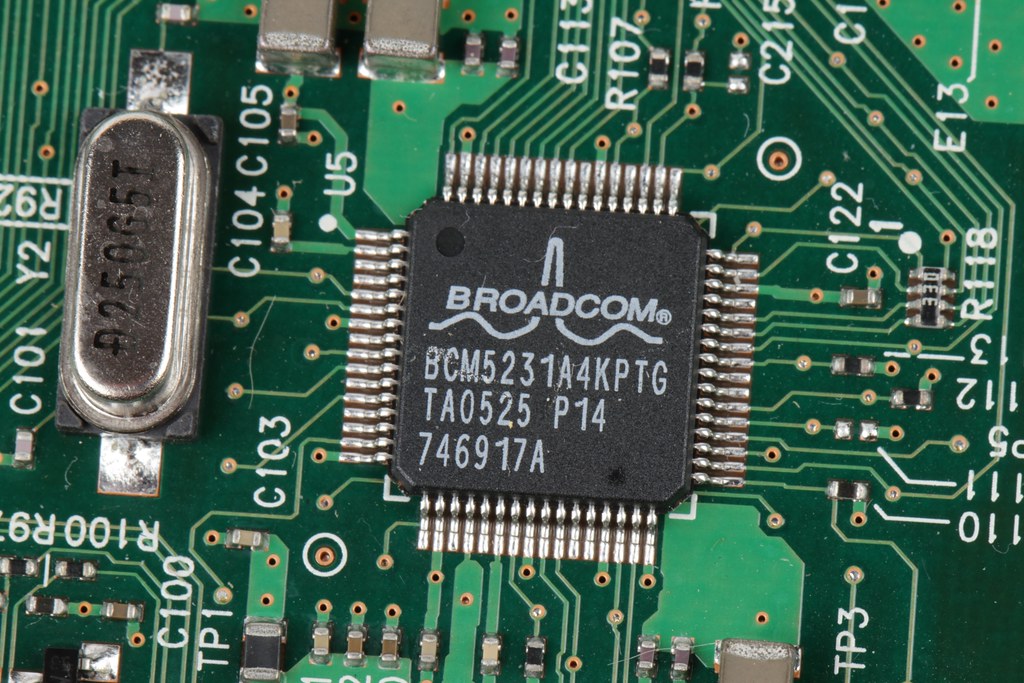
The Threshold Has Been Crossed
The single most important fact in Anthropic's April 7 announcement is not the revenue number. It is that a private AI company now has enough predictable, contracted demand to anchor a utility-scale infrastructure commitment. Anthropic has signed an agreement with Google and Broadcom for approximately 3.5 gigawatts of computing capacity built on Google's tensor processing units, with the capacity expected to come online starting in 2027. That is not a datacenter allocation. That is a power grid.
For context: a large hyperscaler datacenter runs roughly 10 to 50 megawatts. At 3.5 gigawatts, this single commitment is 70 to 350 times that scale. It belongs in the same category as industrial manufacturing or aluminum smelting, not cloud infrastructure.
What the Revenue Trajectory Actually Means
Anthropic's revenue trajectory: $87 million run rate in January 2024, $1 billion by December 2024, $9 billion by end of 2025, $14 billion in February 2026, $19 billion in March, and $30 billion in April. The acceleration from $14 billion to $30 billion in eight weeks does not fit a software growth curve. It signals a supply-constrained market suddenly finding distribution.
The revenue mix matters more than the headline. Companies are integrating Anthropic's models into internal workflows and customer-facing tools via APIs, while a smaller share of revenue comes from subscriptions to premium chatbot features. Enterprise demand fueled the surge, with over 1,000 businesses now spending more than $1 million annually on Anthropic products, doubling from over 500 in February. API-anchored revenue does not disappear when a competitor ships a new model. It embeds into procurement cycles and expands.
Claude Code, launched publicly in mid-2025, has become the company's fastest-growing product, hitting $1 billion in annualized revenue within six months. A recent analysis estimated that 4% of all GitHub public commits worldwide were being authored by Claude Code, double the percentage from just one month prior. Workflow penetration—not run-rate—is the real signal. Once Claude Code is in the commit loop, extraction costs spike.
The Infrastructure Logic
Understanding the 3.5GW deal requires understanding why month-to-month capacity procurement fails at this scale. When inference demand grows this fast, spot-market procurement creates two problems: availability uncertainty during spikes and cost variance that makes margin forecasting impossible. Long-term dedicated capacity trades negotiating flexibility for execution certainty. At $30 billion run-rate, the unit economics of dedicated infrastructure beats hyperscaler list pricing substantially.
This deal builds on the October 2025 agreement granting Anthropic access to one million Google TPUs and over 1 gigawatt of compute, valued at tens of billions of dollars. The new capacity supplements the 1 GW already coming online in 2026 under the earlier agreement, with Anthropic's use contingent on continued commercial performance. That performance clause is critical: Anthropic does not pay for unused capacity. Google bears the downside risk.
Broadcom and Google have entered a long-term supply agreement running through 2031. This reveals what is actually happening: Google is not allocating existing TPU capacity. It is contracting Broadcom to manufacture next-generation chips on a multi-year schedule specifically for Anthropic.
Who Wins, Who Gets Squeezed
The Google-Broadcom-Anthropic structure produces clear winners. Google locks in a high-margin customer with stable multi-year utilization forecasts. Predictable utilization justifies dedicated infrastructure over commodity pools—a better outcome for both parties than spot transactions. Broadcom shares rose over 6% on the news, with analysts projecting $21 billion in AI revenue from Anthropic in 2026. Broadcom captures revenue from both silicon and interconnect layers.
For NVIDIA, the picture is murkier. Both Anthropic and OpenAI continue drawing heavily on Nvidia GPUs through cloud providers including AWS, Google Cloud, and Microsoft Azure. NVIDIA is not being displaced. But inference workloads that lock into dedicated TPU pools cannot easily migrate back to NVIDIA hardware. Every gigawatt of committed TPU capacity is inference demand structurally unavailable to H-series or Blackwell chips.
The competitive pressure on other labs is direct. OpenAI has committed to 6GW of AMD GPU capacity, with the first gigawatt expected in the second half of this year. The compute race is no longer about benchmark dominance. It is about securing enough capacity to serve enterprise SLAs at scale without margin-destroying spot purchases.
The Power Infrastructure Constraint
The least discussed detail: gigawatt-scale commitments require power infrastructure planning 18 to 36 months upstream of deployment. The multi-gigawatt capacity is expected to come online in 2027. Google coordinated with utilities and contracted for power well before the deal was announced. Physical infrastructure—power, cooling, fiber, land—is the actual long lead-time constraint. The chip design and deal terms are the visible layer. Grid interconnection is the binding one.
Anthropic said a vast majority of the new compute will be situated in the US, expanding on its $50 billion commitment to strengthening the country's computing infrastructure. Geographic concentration of this magnitude creates regional single points of failure that enterprise customers with latency or data-residency requirements must evaluate.
What to Watch
1. Competing gigawatt-scale announcements. The 3.5GW deal sets the baseline for credible scale. Watch for OpenAI and xAI capacity commitments in Q3 2026 or face narrative disadvantage in enterprise procurement.
2. Anthropic gross margin disclosure. The $30 billion run-rate is established; cost structure at this scale remains opaque. An IPO filing (Bloomberg reports October 2026 as possible) will reveal whether inference margins are normalizing. Speculation: 60 to 75 percent gross margins post-infrastructure amortization are plausible but unconfirmed.
3. Regional latency and SLA performance. U.S.-concentrated TPU clusters serving global enterprise customers will create latency differentials. Watch for SLA complaints or customer churn from non-US accounts as 2027 ramp-up accelerates.
4. Microsoft and AWS response. Both cloud providers have substantial Anthropic relationships via Bedrock and Azure Foundry. Claude remains the only frontier AI model available on all three major cloud platforms: Amazon Web Services, Google Cloud, and Microsoft Azure. Watch for whether AWS Trainium or Azure custom-silicon programs respond with comparable long-term capacity guarantees to retain leverage.
5. The consumption clause trigger. If Anthropic's growth decelerates, the contingent consumption clause becomes the first real test of how these contracts unwind. The structure favors Anthropic, but demand softening surfaces quickly in Google's and Broadcom's utilization metrics before any public disclosure.
- Anthropic says it hit a $30 billion revenue run rate after 'crazy' 80x growth
- Anthropic, Google, Broadcom announce 3.5GW TPU deal
- Broadcom to supply Anthropic with 3.5 gigawatts of Google TPU capacity from 2027
- Anthropic ups compute deal with Google and Broadcom amid skyrocketing demand
- Anthropic Triples Google TPU AI Chip Deal to 3.5GW as Revenue Hits $30B
- Anthropic raises $30 billion in Series G funding at $380 billion post-money valuation
- Anthropic Secures Multi-Gigawatt TPU Deal With Google, Broadcom
- Anthropic's Gigawatt-Scale TPU Deal with Broadcom Creates a Structural Advantage
- Anthropic Hits $30 Billion Annual Run Rate with Enterprise ...
- Anthropic Tops $30 Billion Run Rate, Seals Broadcom Deal - Bloomberg
- Anthropic Just Passed OpenAI in Revenue. Here Is Why It Matters. | by David C. | Medium
- Anthropic on X: "Our run-rate revenue has surpassed $30 billion, up from $9 billion at the end of 2025, as demand for Claude continues to accelerate. This partnership gives us the compute to keep pace. Read more: https://t.co/XgSjL0And7" / X
- Anthropic Hits $30 Billion Run Rate as Enterprise Demand Accelerates | PYMNTS.com
- Sources: Anthropic could raise a new $50B round at a valuation of $900B | TechCrunch
- Anthropic Just Passed OpenAI in Revenue. While Spending 4x Less to Train Their Models | SaaStrAI
- Anthropic Triples Google TPU AI Chip Deal to 3.5GW as Revenue Hits $30B
- Anthropic announces deal with Google, Broadcom, says revenue has tripled
- Anthropic secures access to 3.5 gigawatts of compute capacity in Google and Broadcom partnership
- Nvidia vs Google TPU: How the AI Chip Competition Is Reshaping the Market (April 2026)