What Broadcom's Guidance Miss Really Says About AI Capex
A $1.2B shortfall versus consensus on Q3 AI chip guidance sent AVGO down 14% and dragged the entire semiconductor complex with it. The real read is not that AI is slowing — it is that hyperscaler order timing is no longer predictably linear, and the market had priced in something it was never promised.
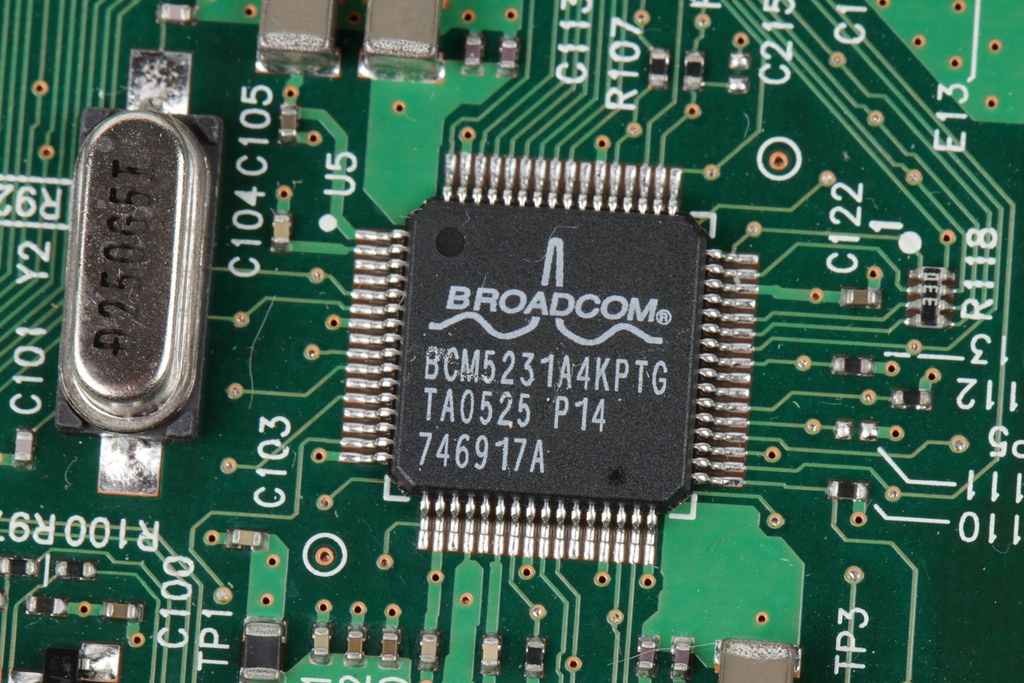
The Number That Moved the Market
On June 3, 2026, Broadcom reported fiscal Q2 results and issued Q3 AI chip revenue guidance of $16 billion. That figure landed 7% below the $17.2 billion sell-side consensus compiled by LSEG. The quarter itself was solid—Broadcom beat on both revenue ($22.19 billion versus $22.13 billion consensus) and non-GAAP EPS ($2.44 versus $2.39 expected)—yet the stock still fell. The cautious Q3 AI guidance triggered a sell-the-news reaction, sending Broadcom shares down 14% on June 4.
The selloff rippled immediately across the supply chain. Micron fell roughly 7% to $1,004 in mid-morning trading on June 4, while Broadcom shares dropped to around $411. Semiconductor equipment makers including ASML, KLA Corporation, Applied Materials, and Lam Research also experienced losses between 5% and 6%. The following day, AMD plummeted 10.86% to close at $466.38, while Intel saw a steeper drop of 11.28%, ending at $99.17.
A single forward guidance line for one revenue subcategory repriced an entire supply chain. That reveals how tightly the sector had wound itself around AI capex assumptions.
What Broadcom Actually Said
The guidance miss sits within a specific structural context that the equity reaction obscured. Broadcom's AI revenue trajectory heading into this print was already aggressive. Q1 AI revenue grew 77% year-over-year to $4.1 billion. Q2 AI revenue grew 46% year-over-year to over $4.4 billion, driven by AI networking demand. Q2 FY2026 AI semiconductor revenue totaled $10.8 billion, up 143% year-on-year. The $16 billion Q3 guide still implies over 200% year-over-year growth. The issue is what the market expected it to be.
More critically, Hock Tan did not raise the company's full-year fiscal 2026 AI chip revenue guidance during the earnings call. He reiterated guidance for AI semiconductor revenue exceeding $100 billion, and Bernstein analyst Stacy Rasgon noted that it was the Q3 AI revenue guidance that weighed on Broadcom's stock price.
One signal warrants particular attention. Tan confirmed that AI networking accounted for nearly 40% of AI semiconductor revenue in the quarter, but added that this share is expected to normalize over time to around 30%, rather than remain near 40%. This carries margin implications. Networking silicon—switches and routers—carries different margin dynamics than compute accelerators. A shift toward pure compute XPUs at the expense of networking could compress blended margins even if total revenue holds steady.
Broadcom's Position as a Proxy
The reason a Broadcom guidance miss echoes across the entire sector comes down to what Broadcom actually is in the AI supply chain. Broadcom and Marvell control approximately 95% of the custom ASIC co-design market, with Google alone spending roughly $8 billion per year with Broadcom on TPU development. Broadcom currently has at least five identified XPU customers: Google, Meta, OpenAI, Arm/SoftBank, and ByteDance.
Beyond custom AI chips, Broadcom is a leading supplier of networking hardware for modern data centers. Its Ethernet switch and router ASICs—the Tomahawk and Jericho families among them—are industry standards in cloud data centers, with market share often cited near 90%.
This dual position means Broadcom's forward guidance functions as one of the clearest available leading indicators for aggregate hyperscaler AI infrastructure spend. When that number comes in light, the implication is straightforward: either some hyperscalers are pacing orders differently, or aggregate capex velocity isn't accelerating as consensus assumed.
The Correct Read: Timing, Not Collapse
The market has grown accustomed to seeing strong upward revisions from top AI businesses every quarter. Investors effectively punished Broadcom not for missing expectations, but for failing to exceed increasingly unrealistic ones.
The distinction matters. A 200%-plus year-over-year growth rate in AI chip revenue that lands $1.2 billion below a sell-side model isn't evidence of demand deterioration. It suggests that order timing is lumpy and that consensus estimates had embedded a cadence of upward revision without contractual basis.
But the signal isn't meaningless either. D.A. Davidson managing director Gil Luria pointed to wider market concerns around higher inflation, suggesting investors fear that the data-center buildout could slow if companies pull back on their AI investment. Broadcom's stock had rebounded over 60% from its March lows and gained nearly 40% year-to-date through fiscal 2026, trading at a valuation of roughly 90x P/E, significantly higher than the semiconductor industry average of roughly 69x. At those multiples, even modest misses against whisper numbers trigger outsized reactions. The valuation was pricing in perpetual upward revisions. The guidance removed that assumption.
For operators with GPU or accelerator deployment roadmaps, the practical implication is narrow but real: hyperscaler infrastructure ramps aren't linear, and your utilization assumptions likely inherited that linearity from public capex commentary. Revisit those assumptions now rather than after subsequent data points prove them wrong.
What to Watch
-
Marvell's next earnings call. As the second-largest custom ASIC partner, Marvell's forward AI revenue guidance will either confirm or refute the demand-softness interpretation. If Marvell also guides light, the signal gains weight. If Marvell beats, this becomes a Broadcom-specific order timing issue.
-
Hyperscaler Q2 CY2026 earnings capex commentary. Google, Amazon, and Microsoft report in late July. Listen for language around custom silicon deployment pace versus prior-quarter guidance. Any pullback in committed capex for calendar 2026's second half would validate the cautious read.
-
Broadcom's Q3 actual AI revenue versus the $16 billion guide. A beat in September suggests timing-driven order pull-forward. Performance at or below $16 billion gives credibility to the demand deceleration thesis.
-
AI networking revenue mix dynamics. Broadcom expects the networking share to shift from roughly 40% toward 30% within AI semiconductor revenue. Watch whether that transition compresses gross margins in Q3 and Q4—a distinct question from capex velocity.
- What Triggered the Recent Semiconductor Sell-Off — Kavout
- Broadcom's Q3 Guidance Misses Expectations by $1.2 Billion — TechFlow
- Micron Drops 7% as Broadcom's Disappointing AI Outlook Triggers a Semiconductor Selloff — Yahoo Finance
- Will Broadcom Stock Recover After Its Guidance Disappointment — Motley Fool
- Broadcom Q3 FY2025 Earnings Beat Estimates Amid AI Semi Acceleration — Futurum Group
- Hyperscaler AI ASIC Market Report — Hashrate Index
- AI Data Center Value Chain — Silicon Analysts
- Broadcom Inc. Form 8-K Q2 FY2025 — SEC
- Broadcom Inc. Form 8-K Q1 FY2025 — SEC
- Broadcom Inc. - Form 8-K - FY2025
- Broadcom Inc. - Form 10-Q - FY2025
- Broadcom Inc. - Form 8-K - FY2025
- Broadcom Inc. - Form 10-Q - FY2025
- Broadcom’s AI-Fueled Transformation: Custom Silicon, VMware Stickiness, and Shareholder Returns
- Qualcomm, AI, ASIC, Hyperscalers, Automotive, Data ...
- Micron Drops 7% as Broadcom's Disappointing AI Outlook Triggers a Semiconductor Selloff - 24/7 Wall St.
- Will Broadcom Stock Recover After Its Guidance Disappointment, Or Should You Cut Your Losses?
- Broadcom stock plunges on weak software sales, unchanged AI chip forecast for the year
- Broadcom Inc. Stock Price: Quote, Forecast, Splits & News ...