Claude's $30B Run Rate Just Reset Every Stack-Decision Timeline
Anthropic's 80x Q1 growth signals that the AI market has chosen its primary developer platform. Every operator still on the fence about their LLM stack now has a much shorter runway to decide.
The Number That Breaks the Model
Anthropic's run-rate revenue crossed $30 billion in early April 2026. The trajectory matters more than the headline. The company's annualized revenue run rate surged from $87 million in January 2024 to $30 billion by April 2026, outstripping CEO Dario Amodei's own forecasts by a factor of eight. More concretely: run-rate revenue surpassed $30 billion, up from approximately $9 billion at the end of 2025. That $21 billion climb in a single quarter forces a reappraisal of competitive timelines.
Amodei acknowledged the company tried to plan for 10-fold growth, but revenue and usage increased 80-fold in the first quarter on an annualized basis—an admission made publicly at Anthropic's developer conference. Infrastructure planning this far off is not marketing theater. Growth that shatters your own capacity projections is growth that's real.
What's Actually Driving This
The revenue isn't coming from chat subscriptions or consumer use. Over 500 business customers were each spending over $1 million on an annualized basis in February; that number exceeds 1,000 less than two months later. This metric—four-figure enterprise accounts at seven-figure annual spend—signals production workloads, not pilots.
Claude Code, launched publicly in mid-2025, has become the fastest-growing product in the company's history. It hit $1 billion in annualized revenue within six months of launch, and growth hasn't slowed.
Here's the structural difference: agentic coding tools monetize differently than chat interfaces. Every API call in a production agent loop is a billable token. Developers don't run 80x more calls because they prefer the interface—they do it because the tool is embedded in CI/CD pipelines, code review workflows, and automated test generation that run continuously. Usage becomes proportional to engineering output. That's a fundamentally different demand curve than consumer chat.
Developer Lock-In Is Now the Primary Moat
Switching costs for an engineering team that's rebuilt workflows around Claude Code aren't trivial. Migrating means weeks of rewriting prompt chains, re-validating outputs, retraining engineers on new tools, with uncertain quality outcomes. That friction multiplies with each month of deeper integration.
Claude is now the only frontier AI model available across AWS Bedrock, Google Cloud Vertex AI, and Microsoft Azure Foundry. Three-cloud availability removes a material friction point from enterprise procurement. Architects spec Claude because it's already approved, already contracted, and already familiar to the team—not necessarily because it dominates every benchmark.
For competitors, this is the dangerous inflection. Availability across hyperscaler marketplaces makes Claude increasingly the default choice for new internal tools, favoring adoption through convenience rather than superiority.
The Compute Constraint Is Real
Anthropic acknowledged demand has created "inevitable strain on our infrastructure," impacting "reliability and performance," particularly during peak hours. Companies manufacturing growth don't have reliability problems. Companies with genuine production load do.
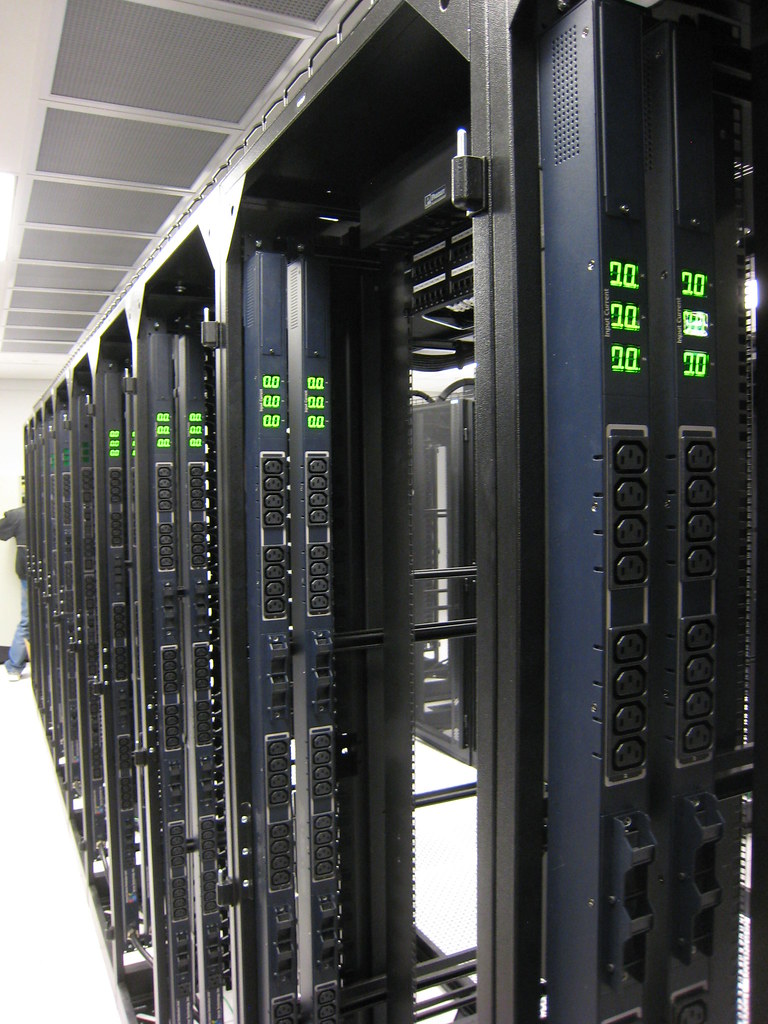
The response has been aggressive. Anthropic signed an agreement with SpaceX to utilize all compute capacity at the Colossus 1 data center—over 300 megawatts of power and 220,000 Nvidia GPUs. Separately, Anthropic secured multiple gigawatts of next-gen TPU capacity through a three-way deal with Google and Broadcom for 2027. These are not contingencies. They're capacity commitments for sustained multi-hundred-percent growth.
What This Means for the Stack
For CTOs at companies with real engineering teams, the planning horizon has compressed. If your roadmap allocates 12 to 18 months to evaluate agentic coding tools, that timeline was formed in a different market. Enterprises committing $1 million-plus annually aren't at the end of a long evaluation—they're responding to demonstrated productivity gains and securing capacity before constraints tighten.
For founders building on top of LLMs, one trend accelerates sharply: the model layer is commoditizing. Dominant developer adoption concentrates competition in vertical differentiation. Your application's value lives in domain expertise, proprietary data, or integration depth—not model selection.
For those building against Anthropic, the math is uncomfortable. OpenAI projects $14 billion in losses for 2026 and breakeven in 2030. Anthropic projects positive free cash flow by 2027. Projections aren't guarantees, but the divergence shapes recruiting, fundraising, and the talent decisions that determine model quality two years out.
What to Watch
-
Q2 2026 run rate: Anthropic is in talks with investors at a $900 billion valuation. Whether Q2 revenue sustains or decelerates from Q1's trajectory becomes the year's most important data point.
-
Compute coming online: Anthropic has deals with Amazon, Google, Nvidia, and Microsoft for capacity, but most won't arrive until late 2026 or 2027. Watch whether capacity relief reduces outages and raises usage limits, directly accelerating the next growth phase.
-
OpenAI's enterprise pricing response: A competitor at $33 billion run rate with $14 billion in projected 2026 losses can't compete on price alone. Expect structural changes to enterprise packaging.
-
Claude Code GitHub commit share: Claude Code now generates approximately 4% of all GitHub commits. Material movement in either direction signals whether developer adoption is compounding or hitting resistance.
-
IPO timing: Anthropic is considering an IPO as early as October 2026. A public offering near a trillion-dollar valuation forces institutional investors with enterprise software exposure to take a position. That capital event reshapes competitive dynamics across the stack.
- Anthropic says it hit a $30 billion revenue run rate after 'crazy' 80x growth
- Anthropic expands partnership with Google and Broadcom for multiple gigawatts of next-generation compute
- Anthropic CEO says 80-fold growth in first quarter explains 'difficulties with compute'
- Anthropic set to hit $10.9 billion in revenue during second quarter
- Anthropic Reports 80x Revenue Growth in Q1 2026
- Anthropic Passed OpenAI in Revenue: $30B ARR April 2026
- Anthropic AI Statistics 2026: Users, Revenue & Market Share
- Anthropic revenue, valuation & funding | Sacra
- Anthropic on X: "Our run-rate revenue has surpassed $30 billion, up from $9 billion at the end of 2025, as demand for Claude continues to accelerate. This partnership gives us the compute to keep pace. Read more: https://t.co/XgSjL0And7" / X
- www.mexc.com
- anthropic targets 26 billion revenue by 2026 as ai demand accelerates
- The app for independent voices
- Anthropic CEO says the company experienced 80x year over year growth in both revenue and usage during Q1 2026.
- Anthropic Grew 80x in Q1 2026 and Its Infrastructure Started Breaking Under the Weight. Here’s What That Growth Actually Looks Like From the Inside. | by Sohail Saifi | Jun, 2026 | Medium
- Dario Amodei's 80x Growth Claim: What Anthropic's Q1 2026 Revenue Numbers Actually Mean | MindStudio
- Anthropic finally beat OpenAI in business AI adoption — but 3 big threats could erase its lead | VentureBeat
- Anthropic grew 80-fold in a single quarter. Now it's renting Elon Musk's data center to cope | Fortune