Memory Is Now the Binding Constraint on Infrastructure Capex
April semiconductor sales hit $110.5B, up 93.9% YoY. The number that matters most for operators is not the headline — it is the structural mismatch between memory supply growing at 16-17% and demand that has already repriced server DRAM contracts 90-95% in a single quarter.
The Number That Changes Your Cost Model
The Semiconductor Industry Association released striking numbers on June 5: global chip sales reached $110.5 billion in April 2026, up 93.9% year-over-year. April sales of $110.5 billion were up 11% from the March 2026 total of $99.5 billion and 93.9% more than the April 2025 total of $56.9 billion. The WSTS Spring 2026 forecast projects full-year sales of $1.5 trillion — a 90% growth rate. SIA endorsed the WSTS Spring 2026 forecast projecting annual global sales will grow 90% to $1.5 trillion in 2026, with 2027 global sales projected to exceed $1.9 trillion.
For infrastructure operators, none of that is the operative fact. The operative fact is this: memory supply is growing at 16-17% while the contracts buying it are repricing 60-95% per quarter. That gap is your new cost floor.
Why This Is Structural, Not Cyclical
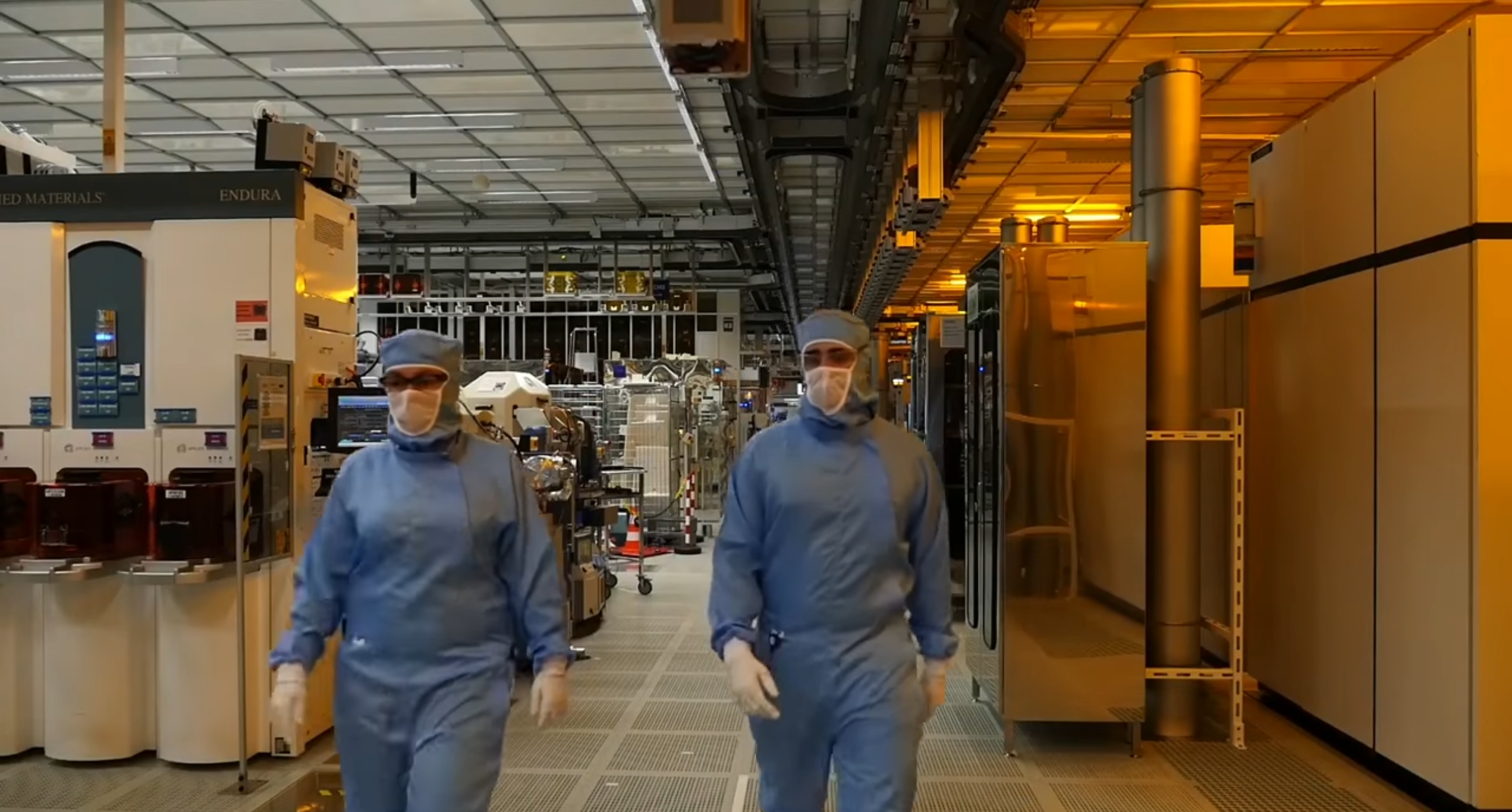
This is not a cyclical shortage driven by supply-demand mismatch alone, but a potentially permanent strategic reallocation of wafer capacity. For decades, DRAM and NAND production for smartphones and PCs drove the industry. Today that dynamic has inverted. Hyperscaler demand for HBM from Microsoft, Google, Meta, and Amazon has forced Samsung, SK Hynix, and Micron to pivot limited cleanroom space toward higher-margin enterprise components.
This is a zero-sum game: every wafer allocated to an HBM stack for an Nvidia GPU is a wafer denied to the LPDDR5X module of a mid-range smartphone or the SSD of a consumer laptop.
SK Hynix currently allocates roughly 30% of its DRAM wafer capacity to HBM production, a figure analysts expect to approach 40% by 2027 as AI accelerator demand intensifies. SK Hynix held a 58% share of the global HBM market in Q1 2026, with its entire 2026 HBM production already sold out.
The supply ceiling is firm. IDC expects 2026 DRAM supply growth of only 16% year-on-year, with NAND supply growth at just 17% — both well below the 20-30% historical norms that defined the post-2018 memory market. New fab capacity from Micron and SK Hynix will not reach volume production until 2027 at the earliest, creating a prolonged supply gap.
What Prices Are Actually Doing
Contract pricing is forcing infrastructure operators to recalculate run rates mid-cycle. Conventional DRAM contract prices will rise 58-63% quarter-over-quarter in Q2 2026, while NAND Flash contract prices will jump 70-75% QoQ, according to TrendForce. These increases follow a Q1 that saw DRAM contracts climb by a record 90-95% QoQ.
Global DRAM inventory is at only 2-3 weeks, and NAND inventory is 3-4 weeks — both at historically low levels. There is no buffer against demand spikes. Any training cluster expansion or inference fleet that was not contracted before Q1 is now buying into peak pricing.
Revenue per wafer for HBM is estimated to be three to five times higher than conventional DDR5, which means manufacturers have no economic incentive to return capacity to commodity channels. This price signal is not a temporary shortage premium.
Who Has Allocation and Who Does Not
The hyperscalers moved first. Hyperscale cloud providers including Meta, Google, Microsoft, and Amazon have been signing long-term supply agreements with memory manufacturers, effectively locking up production capacity. In October 2025, Samsung and SK Hynix struck a deal with OpenAI, signing a letter of intent for eventual supply of 900,000 DRAM wafers per month to meet the memory demands of its Stargate project.
Those agreements, locked in through 2029, will reshape global memory markets. The 900,000-wafer commitment represents approximately 40% of total global DRAM output.
For operators who did not contract early, spot markets are the only option—and spot pricing is diverging sharply from contract pricing. Any infrastructure plan written before Q1 2026 that assumed flat or single-digit memory cost escalation should be scrapped.
The Inference Cost Implication
The memory constraint is not purely a procurement problem. It compresses margins for inference-heavy services. LLM inference is memory-bandwidth-bound, not compute-bound. A model serving requests at scale holds billions of parameters in VRAM; the cost of that VRAM is moving at 60-95% per quarter. Inference pricing set in 2025 is underwater unless contracts passed through escalation clauses.
Inference providers who absorbed memory cost increases rather than passing them through are compressing margins quarter over quarter. Those who indexed pricing to hardware cost will reprice in H2 2026. Watch for API pricing changes from mid-tier inference providers first.
Capacity Is Coming, But Not in 2026
SK Group Chairman Chey Tae-won announced at Computex 2026 that SK Hynix will double its wafer capacity within five years, citing a memory shortage expected to persist through 2030. The company is projected to spend over KRW 30 trillion in capex this year alone.
SK Hynix's new Cheongju fab, M15X, is already coming online in the first half of 2026, starting at around 10,000 wafers per month before ramping to 50,000 by Q4. The company is targeting total DRAM capacity of approximately 620,000 wafers per month by the second half of 2026.
That helps, but does not solve H2 2026 allocation. The supply relief from current investment announcements lands in 2027 at the earliest.
What to Watch
-
Q2 earnings from Samsung, SK Hynix, and Micron (July 2026). Watch for HBM allocation percentages, contract vs. spot ASP spread, and whether any announced capacity is being pulled forward. SK Hynix's M15X ramp rate is the leading indicator.
-
Hyperscaler capex announcements in Q2 earnings calls. SIA cited increasing demand for AI infrastructure and accelerated computing platforms as the driver behind the $1.5 trillion projection arriving earlier than expected. Further capex increases tighten memory allocation into 2027.
-
Spot vs. contract price divergence for server DRAM. Widening spread signals genuine shortage; narrowing spread signals demand softening or supply relief arriving sooner than expected.
-
OpenAI Stargate memory drawdown cadence. OpenAI's projected demand of 900,000 DRAM wafers per month could account for nearly 40% of global DRAM output. If Stargate deployment accelerates, every other buyer gets squeezed in sequence.
-
Micron's HBM4 qualification timeline with Nvidia. Micron has started shipping HBM4 samples rated at up to 11 gigabits per second. Qualification at Nvidia would break the effective SK Hynix duopoly on Nvidia HBM supply and is the single event most likely to relieve constraint before new fab capacity arrives.
- Global Semiconductor Sales Increase 11% Month-to-Month in April — SIA
- Global Memory Shortage Crisis: Market Analysis — IDC
- DRAM prices predicted to jump 63% in Q2, NAND up to 75% — Tom's Hardware
- Memory Chip Shortage 2026: HBM Takes 23% of DRAM Wafers — Tech Insider
- SK Hynix DRAM Capacity Roadmap Revealed — TechTimes
- SK Hynix Pledges to Double Wafer Capacity Within Five Years — Startup Fortune
- Samsung and SK Hynix to Scale Up Memory Production in 2026 — Data Center Dynamics
- 2026 Memory Industry Insights — Global Semi Research
- Semiconductor Latest News | SIA | Semiconductor Industry Association
- Market Data – Semiconductor Industry Association
- Global Semiconductor Sales Increase 25% from Q4 2025 to Q1 2026 - Semiconductor Industry Association
- Global chip sales surge in 1Q26, signaling supply and investment shifts
- April semiconductor sales up 93.9% YoY says SIA | Electronics Weekly
- Global Semiconductor Sales Increase 11% Month-to-Month in April | SemiWiki
- Global Semiconductor Sales Increase Substantially in February - Semiconductor Industry Association
- Semiconductor industry on track to hit $1 trillion in sales in 2026, SIA predicts — bumper forecast follows $791.7 billion haul for 2025 | Tom's Hardware
- Global semiconductor sales by month 2026| Statista
- Memory Chip Market Forecast 2026: DRAM, NAND, HBM, and NOR Flash - Blog - Ampheo
- Memory Outlook Report 2026 | TechInsights
- 2026 Market Outlook: SK hynix’s HBM to Fuel AI Memory Boom
- AI storage chip crunch in 2026: DRAM, NAND prices surge up to 70%
- Here's why HBM is coming for your PC's RAM — HBM consumes around three times the wafer capacity of DDR5 per gigabyte, as AI supercharges demand for chips and advanced packaging | Tom's Hardware
- South Korea's HBM4 Moment | Introl Blog
- [News] SK hynix Reportedly to Double DRAM Capacity in 2H26 to Match Samsung, Pulls Back on NAND
- HBM Three-Way War: SK Hynix, Samsung & Micron in the AI Memory Supercycle — Landscape and Investment Thesis | Momoview