Meta's Cloud Play Is a Capex Survival Move, and It Threatens Every Neocloud in the Market
When a company with $182.9 billion in committed AI infrastructure starts selling spare compute, it is not a product launch. It is a structural repricing of the entire cloud stack.

The Thesis
Meta does not need to win the cloud market to break it. It just needs to put excess GPU racks on the market at a price that reflects amortized-across-advertising economics rather than standalone cloud margins. That's what is now in motion.
Meta Platforms is developing plans to sell excess AI computing capacity and hosted models to external customers, potentially converting its large data-center and chip investments into a new revenue stream. This is no skunkworks experiment. The new business line, reportedly dubbed Meta Compute, is led by head of infrastructure Santosh Janardhan, Meta Superintelligence Labs leader Daniel Gross, and president Dina Powell McCormick. That's C-suite weight.
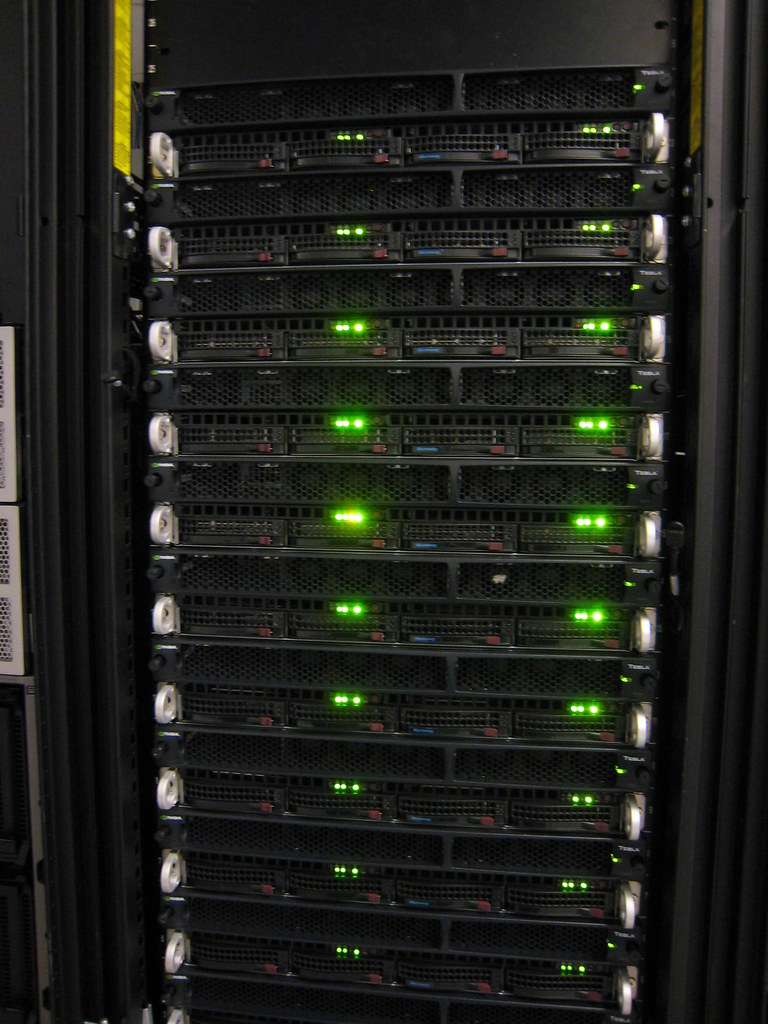
The Capex Math That Forces This
Meta's infrastructure commitment makes this inevitable. By the end of Q1 2026, Meta had committed to spending $182.9 billion on AI infrastructure over the coming years. More pressingly, Meta has guided to capital spending of $115 billion to $135 billion in 2026, an enormous outlay on chips, land, and power.
Despite this enormous capital outlay, Meta has not reported significant standalone revenue from its AI models or services. Idle capacity becomes a problem. Selling compute is financial engineering masquerading as strategy — a response to the capex-to-revenue gap that markets were already punishing. Meta shares had been down close to 15% as of the day before the report, lagging the S&P 500 as investors questioned the pace of its AI outlay.
Two Products, Two Threats
One product would allow developers to access AI models hosted on Meta's servers, similar to other cloud-hosted model platforms. The other would sell raw compute capacity — unprocessed AI computing power such as racks of GPUs — comparable to specialized neocloud providers that rent GPU time.
These target different incumbents.
The hosted-model product goes at AWS Bedrock and Google Vertex AI. The approach closely resembles Amazon Web Services' Bedrock platform, which provides developers with access to AI models from multiple providers via AWS infrastructure. Meta's version anchors on Llama-family models and the recently launched Muse Spark. The raw compute product is a sharper blade: the reported plans overlap with neocloud firms such as CoreWeave and Nebius, which focus more directly on GPU capacity.
Neocloud and data center companies CoreWeave, Nebius, IREN, and Cipher Digital were slammed in the wake of the report. That reaction is justified. A company with Meta's capex base can price raw GPU time below any standalone neocloud, because Meta amortizes the same hardware across advertising, model training, and the cloud product simultaneously. Neoclouds amortize across the cloud product alone.
SpaceX Proves This Is Pattern, Not Outlier
Meta's decision to sell off excess compute comes weeks after SpaceX, via xAI, announced similar plans. SpaceX is already further along. In early May, SpaceX signed a deal with Anthropic to buy out all of the compute capacity at SpaceX's Colossus 1 data center. SpaceX has signed similar leases since with Google and Reflection AI. The Reflection AI deal alone is substantial: the open-source AI startup will pay SpaceX $150 million per month starting July 1, 2026, with payments totaling about $6.3 billion if the deal runs through 2029.
Bloomberg Intelligence sees broader opportunity. SpaceX has been renting spare capacity from xAI's Memphis data center to Anthropic, an arrangement Bloomberg Intelligence estimates could bring in more than $50 billion by 2028 and $100 billion by 2030.
Capital-heavy operators — companies whose primary business isn't cloud but whose infrastructure exceeds their own consumption — are treating excess capacity as a standalone P&L. Refineries sold excess heat. Airlines sold frequent-flier miles to banks. Amazon externalized AWS. The constraint that previously blocked this was lack of demand. AI training and inference demand has removed it.
What This Does to Cloud Vendors
Structural damage cuts two ways.
First, pricing pressure. Rather than letting expensive infrastructure sit idle, companies are discovering they can generate new revenue by selling unused AI compute. When sellers with diversified revenue enter a market, they price to marginal cost, not fully-loaded cost. Cloud-only vendors price to fully-loaded cost because they have nothing else. The margin compression that follows is not speculative — it started the moment CoreWeave's stock moved on the Meta news.
Second, bundling power. Meta hosting Muse Spark and Llama variants on infrastructure it rents to customers creates obvious bundling incentives. Access to frontier open-weight models plus the compute to run them beats raw GPU hours alone. AWS built Bedrock in response to this exact dynamic. Meta starts with model inventory already in hand.
If Meta sells raw capacity, it would be competing with CoreWeave, Nscale, and other neocloud providers that have built data centers specifically for AI training and inference. Those companies built for a scarce market. Supply is no longer scarce when entities with nine-figure monthly capex budgets become vendors.
The Counterargument Worth Taking Seriously
Some skeptics have warned the race to build out AI infrastructure is creating a bubble that leans heavily on rapidly depreciating chips. GPU generations turn over fast. H100 clusters that cost $30,000 per unit eighteen months ago face pressure from H200 and GB300 deployments. Multi-year compute contracts locked into yesterday's hardware at steep discounts may repel sophisticated buyers.
Execution is another question mark. Meta has yet to announce when such a service could launch. Billing infrastructure, SLAs, support, and enterprise sales motion take time to build. AWS spent years on this. Zuckerberg said a cloud push was "definitely on the table" as recently as Meta's May shareholder meeting, which means operational timelines remain murky.
The more likely near-term product is wholesale compute leases structured like SpaceX's — block deals to AI labs and large enterprises — rather than a self-serve console competing with AWS. That narrows immediate threats to enterprise customers and neoclouds, not SMB AWS revenue.
What to Watch
- Pricing structure announcement: Whether Meta Compute launches with wholesale block pricing (SpaceX model) or metered self-serve API (AWS model) determines which incumbents feel pressure first.
- CoreWeave and Nebius contract renewals: Watch Q3 earnings calls for deferral signals ahead of Meta capacity coming online.
- AWS response: Pricing concessions on GPU instances, exclusive model-access bundles, or accelerated Trainium deployment signal real threat rather than press release.
- Meta Compute go-live date: Until there is a signed external customer and live service, this is a plan. Product launch is the material event.
- Chip stock signal: Sustained Nvidia and Broadcom weakness on Meta capacity-selling news would confirm lower future GPU procurement from Meta — a second-order consequence worth tracking separately from cloud competition.
- Meta Is Building a Cloud Business to Sell Excess AI Compute
- Meta, Like SpaceX, Looks to Turn Excess AI Compute Into Cash
- Meta Pops 9% as Company Makes Cloud Push to Sell Excess AI Compute Power Capacity
- SpaceX Signs Compute Deal With Open-Source AI Startup Reflection AI
- Meta Wants to Rent Out Its Spare AI Compute, and Wall Street Likes the Idea
- Meta Could Sell AI Compute Capacity as Infrastructure Costs Rise
- Meta Makes Cloud Push to Sell Excess AI Compute, Following SpaceX's Playbook
- Meta Cloud Business to Sell Excess AI Compute | InsiderFinance
- Meta weighs AI cloud business to sell excess compute capacity
- Meta surges on report it’s starting a cloud business to sell excess AI compute - Sherwood News
- Meta jumps on report it is building cloud business for excess AI compute (META:NASDAQ) | Seeking Alpha
- Meta to Build Cloud Business to Sell Excess AI Compute | Bloomberg Tech 7/01/2026 - YouTube
- AI Bubble Burst: Meta Admits 'Excess Compute Capacity' | Seeking Alpha
- Meta, like SpaceX, looks to turn excess AI compute into cash
- Meta, Following SpaceX, Plans To Monetize Excess AI Compute Capacity
- Meta follows SpaceX's playbook, looks to monetise excess AI compute