OpenAI Bets Its Unit Economics on Silicon It Owns
Jalapeño is not a chip announcement. It is a declaration that inference cost is now an engineering problem OpenAI refuses to outsource.

The Core Bet
The single most important fact in the Jalapeño announcement is not the chip itself. It is the timeline. Jalapeño was co-developed from initial design to manufacturing tape-out in just nine months, representing what may be the fastest ASIC development cycle ever achieved in high-performance advanced semiconductors. A standard large ASIC program runs 18 to 24 months. OpenAI says it compressed that to nine months by putting its own language model to work on design optimization. That compression reframes custom silicon economics for anyone operating at scale.
The underlying bet is structural. Inference has become the dominant AI compute cost; for teams running production AI at scale, inference typically accounts for 60 to 80 percent of total GPU spend. OpenAI reportedly spent around 50 percent of its revenue on inference compute costs in 2025. At that ratio, controlling your inference substrate is not a supply-chain move. It is a margin move.
What Jalapeño Actually Is
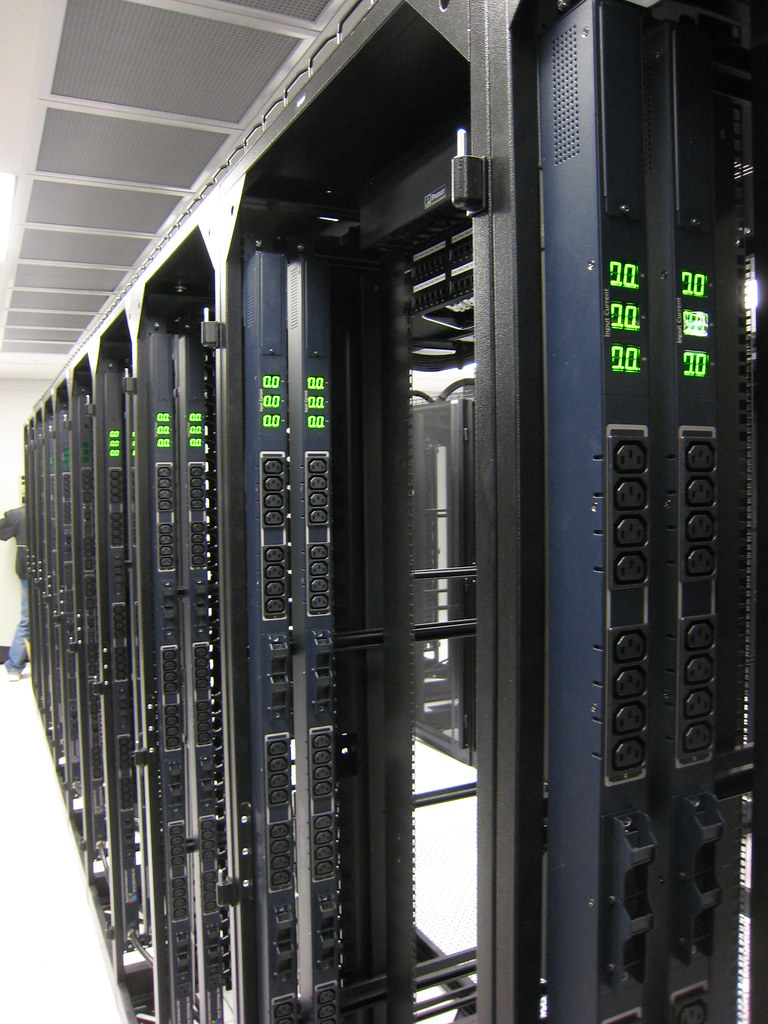
OpenAI stresses that Jalapeño is a purpose-built inference ASIC and not a repurposed training accelerator or a general-purpose AI processor. It is a reticle-sized ASIC built on TSMC 3nm, with a systolic array architecture and eight HBM stacks, optimized purely for LLM decode throughput. The architecture was designed based on OpenAI's understanding of LLM behavior to address practical bottlenecks that matter for inference at scale, including costly data movement, balance between compute and memory resources, networking efficiency, and overall serving behavior.
Engineering samples are already running ML workloads in the lab at production target frequency and power, including GPT-5.3-Codex-Spark, and early testing shows Jalapeño will deliver performance per watt substantially better than current state-of-the-art. The claimed figure is roughly 50 percent lower inference cost per token versus GPU baselines. That figure is a stated target backed by early lab data, not a confirmed production result.
The nine-month speed reflects deep software-hardware co-development with OpenAI's engineering teams, Broadcom's silicon implementation expertise, and the use of OpenAI models to accelerate parts of the design and optimization process. Greg Brockman told CNBC that the degree to which the company's models accelerated the chip design process "was very surprising to us." The implication is a feedback loop the company intends to extend: the models powering ChatGPT today are helping design the chips that will run future versions of those models.
The Vertical Integration Logic
GPUs are generalist silicon. They handle training, fine-tuning, inference, video generation, and any other compute-bound workload you can run through CUDA. That flexibility carries a cost: you pay for transistors and power budgets that LLM inference never touches. The operations in LLM inference — attention, linear projections, softmax, sampling — repeat across every token, every request, every model in the same broad family. The memory access patterns are predictable. The compute graph does not change. An ASIC designed around those patterns can shed the generalist overhead and run more inference per watt per dollar.
This is not a novel thesis. Google validated it with TPUs in 2016. Amazon ran the same playbook with Trainium for training and Inferentia for inference. What is new is OpenAI doing it at a scale that signals genuine operational commitment rather than exploratory R&D. Jalapeño follows the October 13, 2025 collaboration between OpenAI and Broadcom for 10 gigawatts of custom AI accelerators. The 10-gigawatt buildout is scheduled to complete by the end of 2029, suggesting successive chip generations over the next three years. Microsoft is expected to purchase approximately 40 percent of the initial production run.
The networking architecture matters as much as the compute die. The Broadcom Ethernet interconnect is a strategic statement. Nvidia's NVLink provides high-bandwidth scale-up networking between GPU nodes but locks buyers into Nvidia's ecosystem. Jalapeño with Broadcom's networking stack scales across racks without requiring any Nvidia component.
Who This Hurts and Who It Helps
Nvidia's exposure here is real but bounded. Pre-training and other performance-intensive tasks will likely still rely on Nvidia hardware. Nvidia's current GPU generation remains the dominant compute substrate for training frontier models, and its CUDA software ecosystem — with over four million registered developers and 15 years of tooling, libraries, and compiler optimizations — is deeply embedded in every layer of the AI software stack. The inference segment is where the pressure concentrates. It remains to be seen how competitive Jalapeño will be against AMD's Instinct MI400-series and Nvidia's Rubin-based offerings once those reach production.
For Broadcom, the deal validates its positioning as the ASIC design partner of record for frontier AI labs. Broadcom's AI chip revenue reached 8.4 billion dollars in Q1 FY2026, up 106 percent year over year, with Q2 AI semiconductor revenue guided to 10.7 billion dollars. CEO Hock Tan has set a target of over 100 billion dollars in AI semiconductor sales by 2027.
Jalapeño is not available to buy or rent. OpenAI designed it exclusively for internal use and has no announced plans to commercialize access. Inference-focused cloud vendors and startups gain nothing except a new cost floor set by a competitor who controls its substrate — which is a different and worse problem.
The Risks Nobody Is Foregrounding
Yield and power budget at production scale matter more than the nine-month tapeout headline. If the next OpenAI accelerator tapes out even faster, the AI-assisted design thesis strengthens; if it reverts to a longer cycle, the nine-month figure looks like a one-off.
Architectural lock-in cuts both ways. Jalapeño is presumably designed around the transformer attention pattern as it exists in 2025 and 2026. If OpenAI's model architecture changes materially, the chip may not serve the next generation of models efficiently, or at all. OpenAI's own history demonstrates this risk: the jump from dense transformer GPT-4 to o-series reasoning models involved significant architectural shifts. A nine-month design cycle helps mitigate that risk, but it does not eliminate it.
As OpenAI lays the groundwork for a heavily anticipated public offering in 2026, the Jalapeño inference chip may offer reassurance to private investors and public markets that OpenAI has a plan for moving toward profitability. That framing is accurate. It also reveals the vulnerability: Jalapeño is partly a financial narrative device. The honest version of this story is that the chip's value to OpenAI depends entirely on whether the cost-per-token claims hold in production at gigawatt scale—a test that will not resolve until 2027 at the earliest.
What to Watch
- Late 2026: Broadcom CEO Tan told CNBC there would be "small prototype development" in late 2026, with full production ramp following. Whether that prototype phase ships on schedule or slips matters.
- Technical report: OpenAI said a detailed technical report on Jalapeño's architecture and benchmarks will be published in the coming months. The absence of hard numbers at announcement means the report is the actual scorecard.
- Generation two: The 10-gigawatt program spans both 3nm and future 2nm chips, suggesting Jalapeño is the first in a planned annual or biennial cadence. The second tapeout timeline will confirm whether AI-assisted design velocity compounds or regresses.
- Nvidia counter: Watch the Rubin inference roadmap specifically. Nvidia has every incentive to prioritize inference-per-watt now that a major customer is publicly routing inference spend off GPU.
- Competitor announcements: The logic applies universally. Every major hyperscaler is now building custom silicon for AI. Anthropic is the notable holdout among frontier labs. That position becomes harder to defend if Jalapeño's cost claims prove out.
- OpenAI and Broadcom Unveil LLM-Optimized Intelligence Processor
- OpenAI and Broadcom Unveil LLM-Optimized Intelligence Processor — Broadcom Investor Relations
- OpenAI unveils its first custom chip, built by Broadcom
- Broadcom and OpenAI unveil custom-built Jalapeño inference processor
- OpenAI and Broadcom reveal Jalapeno, first AI chip in partnership
- OpenAI unveils first custom AI inference chip, Jalapeño, with Broadcom
- OpenAI's First Custom AI Chip Targets 50% Cheaper Inference: Jalapeño Unveiled
- Jalapeño in Nine Months: Did AI Just Break Chip Design Timelines?
- OpenAI's Jalapeño: What a Custom AI Inference Chip Actually Changes
- OpenAI Jalapeño Custom LLM Inference ASIC
- OpenAI Jalapeño Chip Explained: What OpenAI's First Custom Inference ASIC Means for GPU Cloud
- OpenAI Broadcom Jalapeno AI Chip 2026
- OpenAI and Broadcom Unveil Jalapeño, a Custom Inference Chip Targeting Late 2026 Deployment | MLQ News
- OpenAI Jalapeño Chip: First Custom AI Inference Processor Unveiled With Broadcom — 50% Cheaper Than Nvidia GPUs | AIToolsRecap
- OpenAI and Broadcom unveil Jalapeño inference chip for LLMs - BetaNews
- OpenAI Shipped Its First Custom Inference Chip in Nine Months
- OpenAI finalizing custom AI chip design ahead of 2026 launch - report - DCD
- OpenAI launches AI ASIC chip Jalapeno in partnership with Broadcom - Blockspace