QueryFlow Binds Claude to Live Database State — and That Architecture Is the Point
Wiring an LLM to a live schema and to actual query results is a different class of integration than syntax autocomplete. QueryFlow shows what that looks like in practice, and why the pattern matters beyond one app.
The Core Distinction
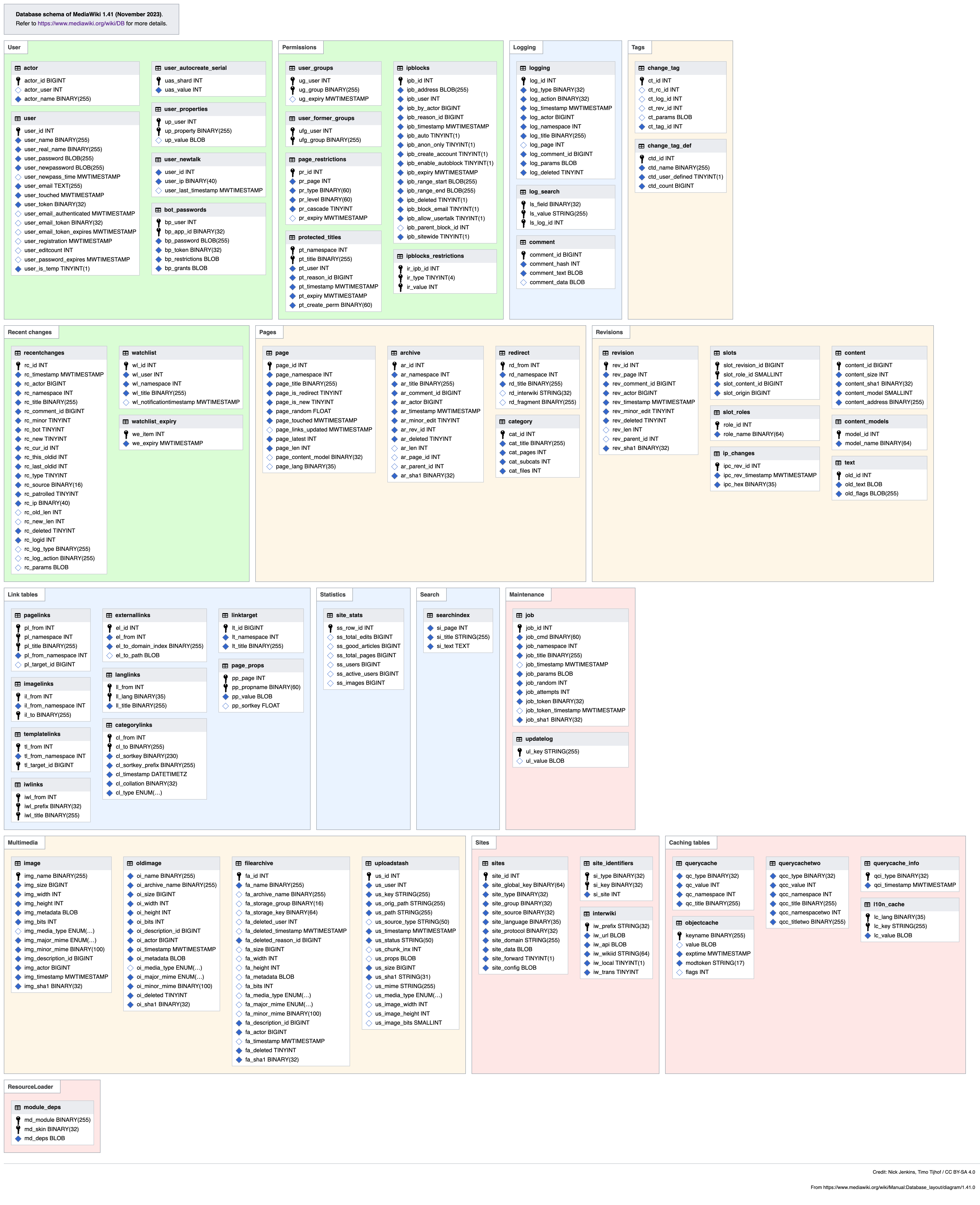
Most AI coding tools operate on text near a cursor. They pattern-match against training data and produce plausible syntax. They do not know whether a table called user_sessions actually exists in your database, whether it has a foreign key to users, or what the last query returned. QueryFlow does both.
QueryFlow offers schema-aware AI completions via Claude — ghost text that knows your tables, columns, and relationships. This is a different contract than a generic code assistant. The model's context window is populated with your live schema at completion time, not with generic SQL examples from the web.
The integration's second layer matters more. A chat panel reads your actual query results. You can ask Claude to explain a slow query, suggest an index, or rewrite a transform in Python. No copy-pasting. No context switching. Claude sees exactly what you see. Those two bindings — schema in, results in — close the loop that every other SQL AI leaves open.
Why Generic Completions Fail Here
SQL in practice is not generic. Analytics SQL rarely is. It depends on naming conventions, domain-specific logic, and edge cases such as refunds, cancellations, and time zone handling. A model that has never seen your schema cannot know whether your money column stores cents or dollars, or whether your orders table has a soft-delete flag that every valid query must filter on.
The core challenge in text-to-SQL tasks is enabling LLMs to understand databases and map user intentions to SQL queries. LLMs possess only general syntactic knowledge. Humans infer overall data distribution by inspecting table contents. Database schemas rarely enforce explicit specifications for such information, rendering it invisible to the LLM and creating a semantic gap — one that systems must bridge by constructing richer database contexts.
QueryFlow addresses this directly by feeding live schema state into the completion context rather than relying on the model's prior training. Completions are grounded in what exists, not in what SQL databases usually look like.
The Results-Aware Chat Panel Is the Harder Problem
Schema-aware completions are becoming table stakes. Schema-aware tools allow Claude to inspect tables, views, columns, indexes, and types via MCP tools. Several vendors, including the ssms-agentic extension for SQL Server and DBHub-connected Claude Code, already do this.
The results-aware chat panel is less common and arguably more valuable. A data analyst runs a query, gets unexpected numbers, and must decide whether the query is wrong, the data is dirty, or their mental model of the schema is off. Today that diagnosis happens in a separate browser tab, in Slack, or by asking a colleague.
Binding the chat panel to live query output collapses that step. The model can reason about the result set directly — seeing actual row counts, null distributions, anomalous values — rather than reasoning abstractly about what a query might return.
A reader module that digests intermediate SQL execution results benefits from broader context including table schema, sampled rows, and the generated SQL query — enabling better understanding of contextual background and semantics needed for accurate predictions. QueryFlow implements this pattern inside a native Mac application rather than a research pipeline.
The Competitive Surface
QueryFlow positions itself as a replacement for DBeaver, Jupyter, and AWS Glue — one native Mac app. That is ambitious. DBeaver has a large installed base; Jupyter is embedded globally in data workflows. Switching rests entirely on whether the AI integration justifies the migration cost.
The threat to generic code completion tools is sharper. GitHub Copilot in SSMS is good for inline T-SQL completion while you write queries by hand, but lacks execution context. If schema-aware, results-aware completions reduce iteration cycles meaningfully — fewer bad queries executed, fewer copy-paste trips to a chat window — friction drops quickly for individuals. Enterprise adoption moves slower.
Traditional text-to-SQL assistants often fall short without schema context. QueryFlow's architecture is a direct answer to that gap, though not alone in pursuing it. The question is whether tight product integration in a native app outperforms an emerging ecosystem of MCP connectors and IDE plugins that any SQL editor could adopt.
What to Watch
First: Measure the right metric. Completion accuracy is a poor proxy here. Look for time-to-valid-result and query iteration count per session. If QueryFlow or any schema-bound tool cannot show reduction in those numbers, the architecture advantage does not translate to operator value.
Second: Watch whether the results-aware pattern spreads to adjacent environments. Schema binding for SQL is a proof-of-concept. The same logic applies to log query interfaces, metrics explorers, and API debugging tools — any environment where a model could see both the data structure and the actual output of the last request.
Third: Track whether Anthropic surfaces QueryFlow or similar integrations as reference architectures in enterprise sales. A tightly coupled, domain-specific Claude integration that demonstrably reduces workflow friction is a stronger case for enterprise adoption than a general-purpose chat assistant. If Anthropic cites this pattern in sales materials, the integration model has been validated.
Fourth: Speculation — if schema-aware, execution-aware completions prove effective at reducing error rates, expect warehouse vendors (Snowflake, Databricks) to build equivalent patterns natively into their own IDEs. That would commoditize the integration layer and shift the competitive moat back to the query execution environment itself.
- QueryFlow — AI-Powered macOS SQL Editor, Python Notebooks & ETL Automation
- Using Claude AI to Generate and Optimize SQL
- ssms-agentic: Claude AI extension for SQL Server Management Studio
- MCI-SQL: Text-to-SQL with Metadata-Complete Context and Intermediate Correction
- OpenTab: Advancing Large Language Models as Open-domain Table Reasoners
- Bridging Natural Language and Databases: Best Practices for LLM-Generated SQL
- How to Use Claude Code with Your Database: SQL Queries, Schema Inspection, and DBHub Setup
- Text to SQL with Claude | Claude Cookbook
- AI Data Analyst: Automate SQL Reports with Claude Code | Towards AI
- Generate Complete Database Schemas with Claude for SQL Databases | n8n workflow template
- Claude for Database Work: SQL Queries, ERD Planning & Optimization - Claude AI
- How to Generate SQL Queries with AI: Step-by-Step Guide Using Claude Code and DBHub - DEV Community
- HYVE: Hybrid Views for LLM Context Engineering over Machine Data
- Text-to-SQL with LLM & AI: Complete Guide to Tools and Frameworks
- ExSPIN: Explicit Feedback-Based Self-Play Fine-Tuning for Text-to-SQL Parsing
- SQL-Exchange: Transforming SQL Queries Across Domains
- From Natural Language to SQL: Review of LLM-based Text-to-SQL Systems
- LLM and Agent-Driven Data Analysis: A Systematic Approach for Enterprise Applications and System-level Deployment
- ConStruM: A Structure-Guided LLM Framework for Context-Aware Schema Matching